Be yourself; Everyone else is already taken.
— Oscar Wilde.
This is the first post on my new blog. I’m just getting this new blog going, so stay tuned for more. Subscribe below to get notified when I post new updates.
Your guide to a healthy lifestyle
Be yourself; Everyone else is already taken.
— Oscar Wilde.
This is the first post on my new blog. I’m just getting this new blog going, so stay tuned for more. Subscribe below to get notified when I post new updates.
For most people, practicing a healthy lifestyle seems like a chore. They think you have to go out of your way to go to the grocery store and buy healthy foods, put aside time to work out, or even acquire a gym membership in order to help track your progress. However, obtaining a healthy lifestyle doesn’t have to be difficult and can actually be as easy as a couple clicks on your iPhone with the help of these apps.

Description: MyFitnessPal is an easy way for you to track your calorie intake as well as log your physical activity in order to make sure you are maintaining a healthy weight. In order to start seeing progress, all you have to do is make a profile and input your current weight/height. Then as the days go on, you can either scan food product bar codes with your camera, or log meals individually, and the app will do the rest.
MyFitnessPal will automatically calculate the calories in your foods, meals and recipes and show you how much of each food group you are or aren’t eating. You can also input your exercise, to evaluate if you are eating too much, too little, or just enough. Whether you want to lose weight, get toned, start a new diet, or just change your habits, MyFitnessPal is the app for you. Download it today to see how much progress you can make!
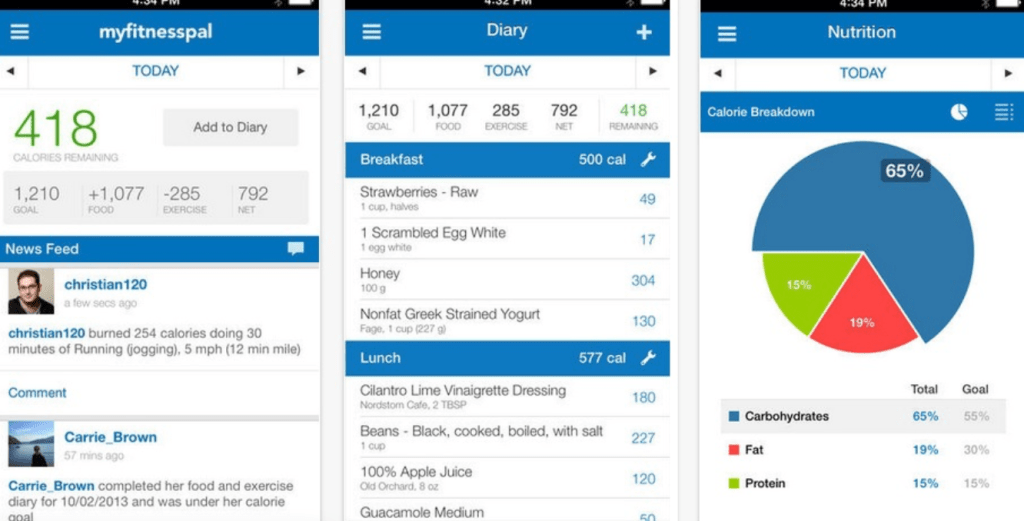
Price: Free
This app was developed by Under Armour Inc and is available for all IOS systems. The app has a current rating of 4.7 stars with numerous reviews regarding how easy it is to log food, interpret the data, and see your progress.

Description: Healthy Recipes-Tasty Food is an app that has thousands of recipes as well as the exact amount of fresh ingredients you can except to need in order to cook them at home. This app offers step-by-step guides to help you cook your meals. If you find something you like, but don’t have time to cook it that day, there is an option for you to save it to your favorites for later. This app is perfect for people who want to cook healthy, but don’t know where to start.
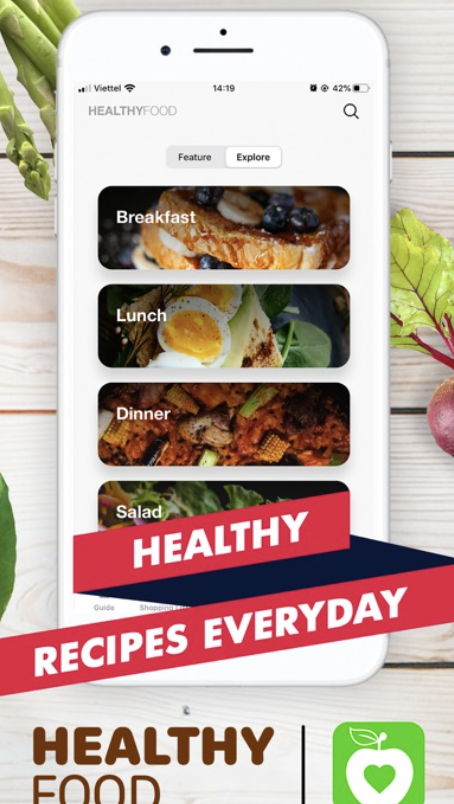
Price: $1.99 per week, $4.99 per month, and $39.99 per year
This app was developed by Thi Hoa and is compatible on all IOS systems. Although it has a 4.7 star rating on the App Store, some reviews explain that the app would be more beneficial if it included more precise serving size information. However, other reviews explain how the app doesn’t force you to go out and buy a bunch of things, but rather take what you have and modify it into something delicious. Download the app today and let’s see what your review is!

Description: 30 Day Fitness is a home workout daily challenge app that promises you’ll see tangible results as well as achieve personal fitness goals in just 30 days. The app comes with hundreds of workouts carefully selected for you, HD video tutorials for all the routines, and a feature for you to be able to track your progress.
It also allows you to share your progress with friends on different social media platforms. For people who don’t have lots of time to carve out for the gym, this is the perfect app for you. Train at home, or wherever you want, whenever you want. Have your 30 day body transformation start today!
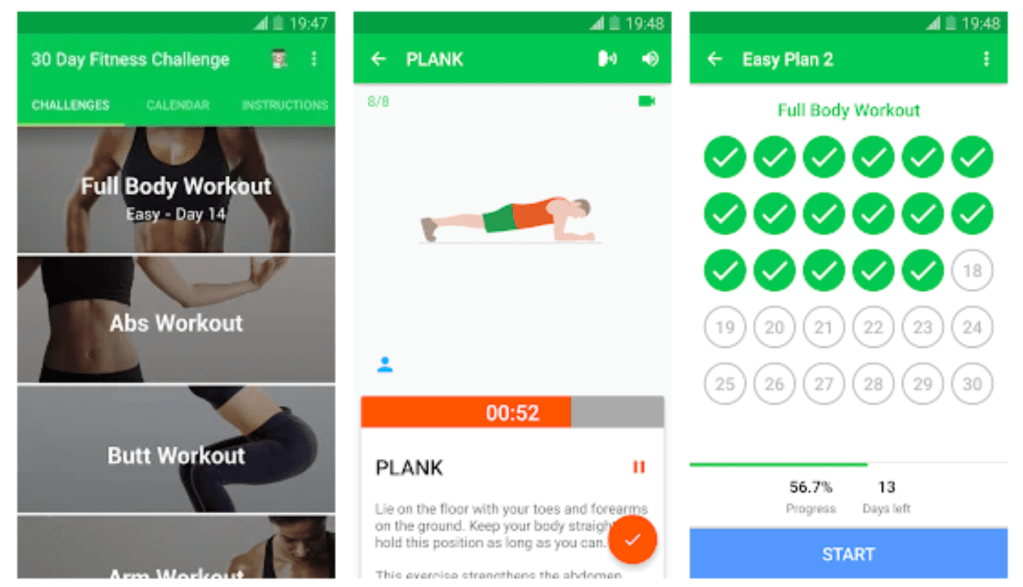
Price: Free
This app was created by Bending Spoons Apps IVS and is compatible on all IOS platforms. It has a 4.2 star rating on the App Store with a number of positive reviews. This app is sure to get you off the couch, and feeling confident in your own skin in no time.
There’s No Better Time Than Now:
Exercising and healthy eating should be able to be an easily obtainable thing for people, and not something they fear. In today’s day there are hundreds of apps and resources people can use to help jump start their healthy life styles. Whether you want help tracking your calorie consumption, easy recipes for your family, or simple at home workouts to help you shed that extra tummy weight, the App Store has you covered. Your healthy lifestyle journey begins now!
Parents want the best for their kids. They try to give them the world and buy them whatever they want (within reason). However, most parents don’t understand that the greatest gift they can give their kids is a healthy lifestyle. Parents are the foundation of preventing childhood obesity, which is such a wide spread epidemic within the world these days.
Most people, as well as parents themselves, don’t understand how powerful their actions are on children. Children mimic parents and other role models in almost every behavior known to man. That means parents need to understand the simple steps they can take in order to help achieve a healthy life style for their children before it gets too late.
Our guts aren’t always right when it comes to deciding what to do in certain situations, so here are some myths to help clarify what you should and shouldn’t believe regarding combating childhood obesity.
Myth #1: “In our family, we are just big-boned,” parents think that their child is obese based on their family genetics
False: Dayton’s Children’s says that being overweight has nothing to do with bones and instead is due to the fact of having too much body fat. Most of the time body fat lies around the hips and waist where there are zero bones. Having an excess amount of body fat here can not only lead to obesity, but also serious medical issues like diabetes and liver cancer.
Myth #2: Setting realistic goals for your child is the first step in combating childhood obesity
True: Weight loss can be a difficult thing for anybody to accomplish, especially for children who don’t totally understand what’s wrong with them. The National Institute of Health, says that according to the goal-setting theory, unattainable goals impair performance and discourage goal-attaining behavior. This means that if a child sets an unrealistic goal, and doesn’t end up being able to accomplish it, they might blame themselves and feel less driven to partake in any more healthy behaviors.

Myth #3: Childhood physical education classes play an important role in the prevention of childhood obesity
False: According to Medical News Today, physical education classes do not play a significant role in preventing childhood obesity. For some children, physical education classes are the only form of exercise they receive on a daily/weekly basis. However, that is not nearly enough physical activity to combat childhood obesity. If kids want to lower their weight they need to participate in exercise constantly and not only when it’s mandated.
Myth #4: Children who are obese should be put on a diet
False: Most people think that diets are an automatic solution to health issues like obesity. However, that is extremely inaccurate. Help Guide, explained that unless directed by your child’s doctor, a diet is not the way to approach the situation. To find out how they suggest combating childhood obesity, click here.
Myth #5: A lack of access to fresh fruits and vegetables is responsible for the obesity epidemic
False: According to the Washington Post, fewer than 5% of the US population lives in “food deserts,” however roughly 65% of the nation is obese. Obesity is not related to access of nutritious foods, but rather to the choices people make when in convenience stores or presented with junk-food options. The basis of obesity resides in parent’s and children’s lack of self control as well as portion control.

Myth #6: Learning by doing allows your children to become more engaged in healthy eating habits
True: It is a well known fact that children mimic the actions of their role models. By parents cooking healthy options in front of their kids and leading by example, children are more susceptible to want to partake in the same behaviors. Help Guide gives multiple tips, like giving your kids age appropriate jobs, to make them more involved in the kitchen.
Myth #7: “It’s just baby fat-my child will lose weight as they grow”
False: Most children who are overweight in their adolescence tend to carry those same habits into their teenager and adult lives rather than “outgrow” the fat. Dayton’s Children’s explains that it is crucial to check in with your doctor if you suspect that your child’s height/weight ratio isn’t typical for a normal kid that age.

Myth #8: Banning sweets and sugary beverages will solve all obesity related issues
False: Most of the time parents think that if sweets and soda options aren’t available in their own houses, then their children will avoid eating or drinking them in situations where they are present. On the contrary to this, Help Guide said that by banning these foods/drinks an invitation for cravings and overindulging when given the chance occurs. Help your kids resist the urge, and don’t completely ban the sugary products, just limit their availability.
Myth #9: Healthy eating habits are formed in the earliest stage of a child’s life
True: Although different children can be more or less picky compared to others, the basis of a healthy lifestyle starts when they are all just beginning to grow. Appetite to play (@appetitetoplay) takes pride in encouraging physical activity and healthy eating with kids ages 0-5. Their mission is to instill children with healthy habits, and reduce the overall rates of childhood obesity. There’s no better time to start forming your child’s healthy habits then when they’re young!
They Will Thank You Later:
Childhood obesity is something that effects not only children, but parents and families of those children. It is a wide spread epidemic that we, a world wide population, need to combat and abolish immediately. It isn’t something that is going to be easy, however with the millions of tips and tricks across the internet, in studies, and in books, we can fight the malicious disease. Your child’s future begins with you, pave it accordingly.
Have you ever been scrolling through social media and all of a sudden see an ad about something you were just talking about? Well it isn’t a coincidence.
According to internet conspiracy theorists, people within the tech world are using the microphones on our smartphones to listen in on our conversations and then create ads to provoke what we want.
These ads can be part of the blame for childhood obesity rates. Like I said in one of my previous posts, children across the United States are becoming obese at younger ages. With social media ads portraying appetizing fast food meals, as well as offering coupons, breaking the habit of eating out is very difficult.
Resist the urge:
Since there are also fast food restaurants at nearly every corner, the easily accessible, and cheap options make it hard to want to take the time to cook and prepare healthy meals. This is why the main source of childhood obesity rates start with parents. I hope you remember my previous post, about how prevalent childhood obesity is within the world and how you parents, have the power to help your child resist becoming obese.
If you are ever on the urge of swinging by a drive through for a burger and fries for your child, remember how one happy meal can increase their risk of developing obesity and potentially even cardio vascular disease. So what’s more important? Taking the easy way out and picking up a 12 pack of tacos for your family, or your children’s overall health?
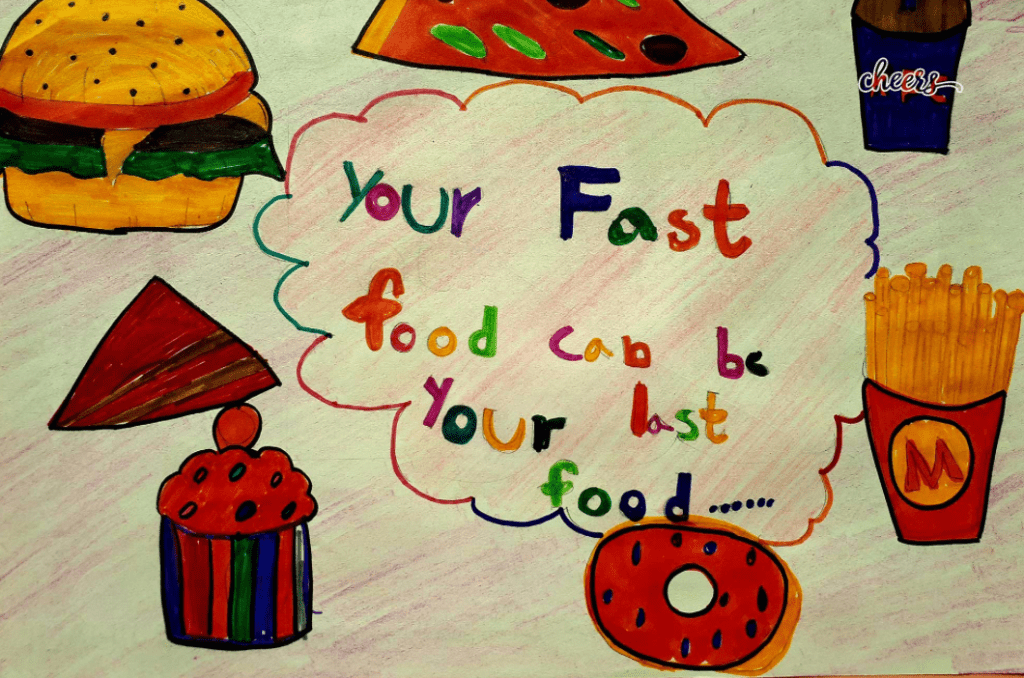
Keep this slogan in mind while you are scrolling through Instagram, or Facebook thinking about what you are going to make your kids for dinner. All it takes is one substitution of a fast food option once a week, in order to become on track for better health both physically and mentally.
Too busy cooking to read this?
Follow my social media accounts on Vimeo and Twitter for tips and tricks on up to date info about how you can make small steps in an attempt to go fresh. From my informational cooking videos, to simple recipes, my accounts are not ones you are going to want to skip past!
Vimeo: https://vimeo.com/383659030
Twitter: @freshnessutaste
Disclosure:
The goal of my blog is for health promotion and to help reduce the number of children within the world who are at risk of becoming obese. With that being said, my goal is not to make any form of profit or gain data from any of my followers. I will also not be using copyrighted material or plagiarizing data as my own without giving credit to my sources.

As we have seen, obesity is a huge issue within the United States especially in children. There is no doubt that we as a population need to start taking action in combating childhood obesity before it is too late. Easy steps people can make are to avoid going through drive throughs on a weekly basis, focus on buying only fresh foods, and having their kids be engaged in some sort of physical activity daily. To discover more useful resources on how to combat childhood obesity read below.
Sources You Can Trust:
The organization behind this website is called Healthline which is a health information site that provides physical and mental health facets for all types of people. From their online website, to their apps, healthline can provide helpful tips and information regarding any topic you need.
In the childhood obesity section ten easy steps to take action in reducing your child’s risk of developing childhood obesity are listed which include: becoming more active, eating a healthier diet, using portion control, and removing temptations. For any parents who need help jumpstarting their household in efforts to reduce their child’s risk of obesity, check out health line’s tips.
Preventing Childhood Obesity: Tips for Parents
This website was created by the New York State Department of Health and commissioned by Howard Zucker M.D. who has worked in the medical field for numerous years and has done countless research on different epidemics within the world including obesity.
This website gives parents signs to look out for in their children that might put them at a greater risk of becoming obese. The website also lists different examples of proper portion sizes for all categories of food. This source could benefit any parent who needs help giving their child the proper amount of food on a day to day basis.
Scary News About Childhood Obesity:
A blog written by Claire McCarthy, MD from Harvard Health Publishing, about the latest data regarding childhood obesity explained that the trends of it within the United States have jumped significantly in the past two years. Claire McCarthy is a primary care pediatrician at Boston Children’s Hospital and also writes about health and parenting for the Huffington Post.
Her blog explained how susceptible certain ethnicities and genders are to becoming obese at young ages. She also discussed the steps that parents need to take in order to know if their children are at risk of becoming or already are obese. This data would be good for parents to refer to if they suspect their child to have symptoms of becoming obese. Everyone should be aware of the symptoms and know how to take action if those symptoms arise.
Sources To Be On The Lookout For:
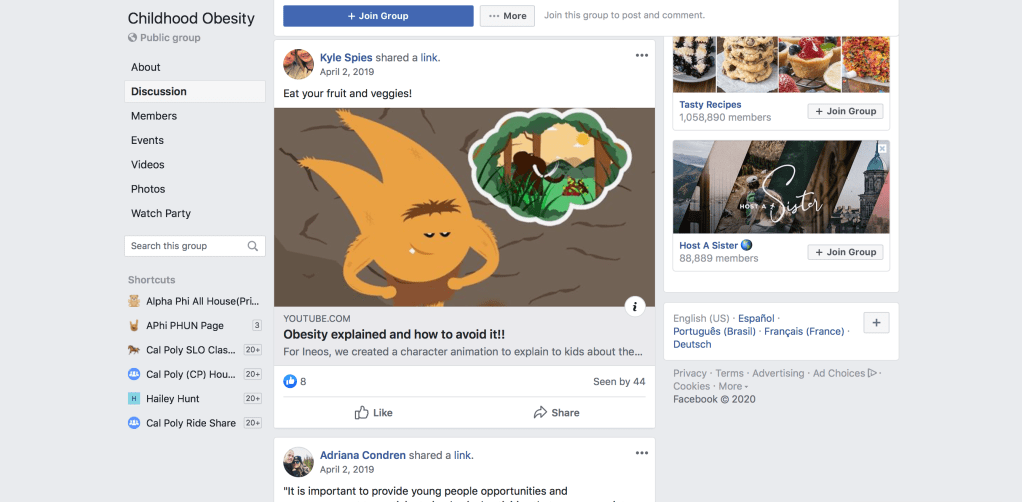
This public Facebook page was created by a random mother in an attempt to have somewhere for other parents to share their thoughts, concerns, and knowledge on childhood obesity. Although this Facebook page might contain some what resourceful information on how to combat childhood obesity, it is an overall non credible source because of its lack of validity.
Just like Facebook accounts, Instagram accounts also serve as an outlet to publish information to the public. Unfortunately, instead of having their posts contain accurate, useful information, the different account pages serve for the primary reason of being a social media platform for people to communicate and attract followers rather than solve an issue at hand.
Just like certain Facebook and Instagram posts, Pinterest boards are created by people within the general population with the goal of promoting personal knowledge on a given subject. Most of the time you can’t figure out who posted the board and therefore can’t check to see if what their promoting is credible information.
Not to mention that when you go on Pinterest and type “childhood obesity” into the search bar, after clicking on one of the numerous boards with a statistic relating to childhood obesity, there is very little elaboration on how a parent can help reduce the risk of their child becoming obese. These Pinterest boards have a lack of validity and therefore can’t always be trusted when dealing with serious situations like battling childhood obesity.
Take Aways:
Parents should be on the look out for credible sources when trying to improve the quality of their kid’s lives regarding childhood obesity. When searching for credible sources first look at websites and blogs which are funded from health promotion agencies.
There are thousands of resources in the world that might portray relevant information, however you should always make sure a credible author can back up what they’re saying. With the right resources and the right steps parents around the world can combat the issue of childhood obesity one home cooked meal at a time.
Problem:
People across the United States are becoming obese at younger ages which is leading to more deaths due to cardiovascular disease. It is very unfortunate because the rate at which adolescents are being categorized as “obese” is progressively getting younger as years go on. Healthy lifestyle choices need to be implemented during childhood so there is a better chance of adequate health knowledge before it’s too late.
Stats:
According to data from the National Health and Nutrition Examination Survey (NHANES) between the years of 2013-2014 about 1 in 6 children and adolescents ages 2 to 19 were considered to have obesity. This means that in a typical school class of 30 kids, at least 5 of them are classified as obese if not extremely obese. The fast food chain has only increased dramatically, so it’s safe to say that the obesity rates have done the same since this data was taken in 2014. It was said that parents and caregivers have the biggest impact on helping children in reducing weight by providing a healthy diet and making children be physically active. If parents choose to go through a drive through rather than make a home cooked meal, the chances of more children becoming obese is multiplied exponentially.
Who It Affects:
Obesity can be consequential in a number of ways, one of which being type 2 diabetes. Almost 90% of people with type 2 diabetes are overweight or affected with some form of obesity. A lack of exercise, on top of being over weight create a deadly combination for insulin resistance which creates the development of type 2 diabetes.
What is even more consequential is the correlation of obesity and cardiovascular disease. Cardiovascular disease is the number one leading cause of death in both men and women within the United States. According to the CDC, one person dies every 37 seconds in the United States from cardiovascular disease, which totals to nearly 647,000 American deaths each year. That’s 1 in 4 people. Think about how your family, friends, or spouse would feel if you unexpectedly passed away from a heart attack tomorrow because you were extremely obese and had the power to change it all along.
A study conducted at the John Hopkins University of Medicine said that one of the national health objectives for 2020 is to reduce the prevalence of obesity. Unfortunately, current data is showing no improvements so far. This is extremely important for people to realize because if change can’t start now, when is it ever going to start?
Goals:
To help reduce the number of obesity cases within the United States here are some simple goals:
Resources:
Some great obesity prevention resources are listed here:
This is an example post, originally published as part of Blogging University. Enroll in one of our ten programs, and start your blog right.
You’re going to publish a post today. Don’t worry about how your blog looks. Don’t worry if you haven’t given it a name yet, or you’re feeling overwhelmed. Just click the “New Post” button, and tell us why you’re here.
Why do this?
The post can be short or long, a personal intro to your life or a bloggy mission statement, a manifesto for the future or a simple outline of your the types of things you hope to publish.
To help you get started, here are a few questions:
You’re not locked into any of this; one of the wonderful things about blogs is how they constantly evolve as we learn, grow, and interact with one another — but it’s good to know where and why you started, and articulating your goals may just give you a few other post ideas.
Can’t think how to get started? Just write the first thing that pops into your head. Anne Lamott, author of a book on writing we love, says that you need to give yourself permission to write a “crappy first draft”. Anne makes a great point — just start writing, and worry about editing it later.
When you’re ready to publish, give your post three to five tags that describe your blog’s focus — writing, photography, fiction, parenting, food, cars, movies, sports, whatever. These tags will help others who care about your topics find you in the Reader. Make sure one of the tags is “zerotohero,” so other new bloggers can find you, too.

 Healthy Choices